
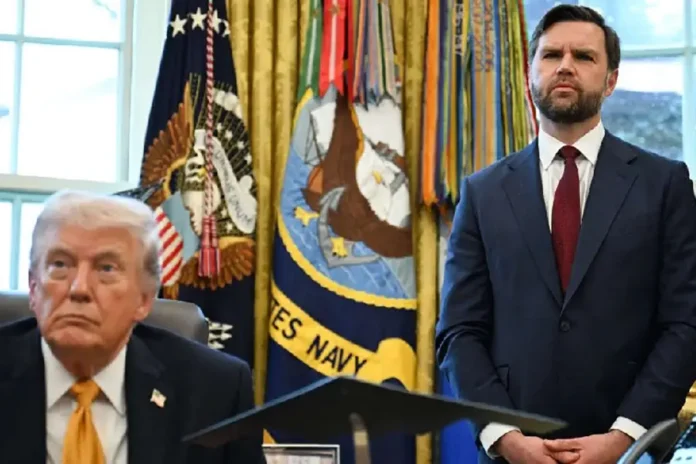
The White House is strongly rejecting recent reports suggesting that Vice President JD Vance has taken a backseat role during Operation Epic Fury, the ongoing U.S.-Israel military operation involving Iran.
Officials dismissed the claims as misleading, arguing that Vance has remained actively involved behind the scenes, even if his public appearances have been more limited.
“This narrative is completely false and frankly ridiculous to anyone familiar with what’s happening in Washington,” a White House official told Fox News Digital. “It’s another example of a media-driven storyline that doesn’t reflect reality.”
Administration Says Leadership Was Coordinated
According to administration officials, the national security team has been in continuous communication since the start of the operation.
A senior White House official told ABC News that top advisers were engaged in discussions throughout the day during the early stages of the strikes, emphasizing that communication strategy was intentional.
“The decision was made to let the president’s statements and national addresses speak for the administration as the operation unfolded,” the official said.
The same source noted that Vance and other officials have participated in multiple media interviews, while the administration has conducted briefing calls with journalists and key stakeholders since the operation began.
Vance’s Public Appearances Highlighted
Despite claims that he has kept a low profile, Vance has appeared publicly several times since the beginning of the conflict.
He spoke on Fox News’ “Jesse Watters Primetime” on March 2, becoming the first administration official—aside from President Donald Trump’s pre-recorded announcement—to address the strikes live on television.
That interview was part of at least nine public appearances Vance has made since Operation Epic Fury began.
During the broadcast, Vance addressed concerns about the possibility of a prolonged war.
“President Trump will not get the United States into a years-long conflict without a clear objective,” he said.
Office Responds to Criticism
A spokesperson for the vice president’s office also rejected claims that Vance has been absent.
“The vice president has not been keeping a low profile,” the spokesperson said. “He has attended two dignified transfers at Dover Air Force Base, appeared on primetime television, held a press gaggle, and delivered two speeches honoring the sacrifice of U.S. service members.”
The dignified transfers took place after American troops were killed during the early days of the operation against Iran.
Past Statements Reflect Caution on War
Reports have also pointed to Vance’s previously expressed reluctance toward military conflict with Iran.
Before the strikes, he reiterated concerns about nuclear proliferation during an appearance on Fox News’ “America’s Newsroom” on February 25, shortly after the president’s State of the Union address.
“You can’t allow the most dangerous regimes in the world to obtain nuclear weapons,” Vance said. “That’s the president’s objective, and he’s pursuing it through diplomacy when possible.”
He added that the administration is prepared to use other measures if necessary, while expressing hope that Iran would take negotiations seriously.
Vance Confirms Role in Strategy Discussions
Speaking to reporters at an event in Rocky Mount, North Carolina, Vance confirmed that he has been directly involved in internal discussions about the conflict.
He described regular meetings with senior officials, including Defense Secretary Pete Hegseth, Gen. Dan Caine, and Secretary of State Marco Rubio, along with President Trump and other key advisers.
“I’m part of those conversations,” Vance said. “We’re discussing options, evaluating risks, and determining how best to protect the American people.”
However, he declined to provide specific details, noting that such discussions are classified.
“I’m not going to stand here and share what was said in a secure room,” he added, emphasizing the importance of confidentiality in national security matters.
Ongoing Debate Over Visibility vs. Involvement
The controversy highlights a broader debate about how visible senior officials should be during military operations.
While critics argue that public appearances signal leadership and transparency, the administration maintains that strategic involvement behind the scenes is what matters most.
As Operation Epic Fury continues, the White House insists that both President Trump and Vice President Vance remain fully engaged in shaping the U.S. response—even if that role is not always visible to the public.