
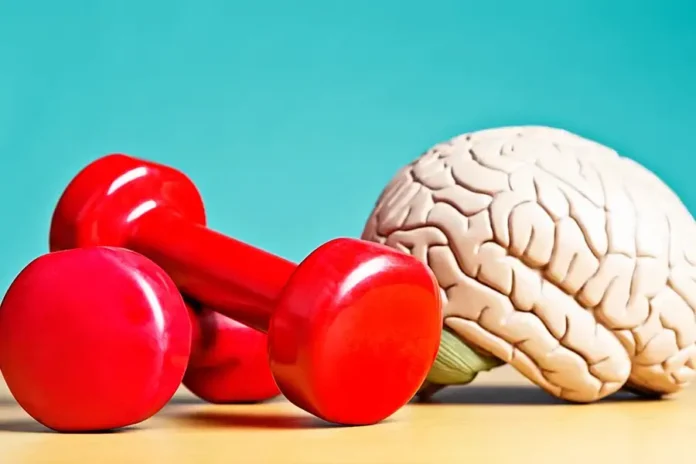
Most of us picture exercise as a story about the body. You lace up your shoes, your legs do the work, your heart pounds, your muscles ache the next morning. The brain barely gets a mention. But a study published in the Cell Press journal Neuron suggests we’ve been giving the brain far too little credit — and that some of the lasting gains from training happen after the workout ends, inside the head rather than the legs.
The takeaway is surprisingly simple: when it comes to building endurance, what your brain does in the hour after you finish exercising may matter just as much as the effort you put in while you’re moving.
“What Actually Happens In There?”
The question driving the research is one most regular exercisers have wondered about without ever putting words to it. You finish a run or a hard session and you feel… different. Clearer. Sharper. More awake.
J. Nicholas Betley, a neuroscientist at the University of Pennsylvania and the study’s corresponding author, wanted to know whether that feeling was more than a mood. “Many people say they feel mentally sharper after exercising,” he noted, and his team set out to trace exactly what shifts inside the brain once the workout is over — and how those shifts feed back into physical performance.
Following the Signal in Real Time
To watch the brain in action, the researchers turned to mice running on treadmills — a setup that lets scientists track neural activity moment by moment in a way that isn’t possible in people.
After each session, several brain regions lit up with activity. But one area stood out: the ventromedial hypothalamus, or VMH, a control center that helps the body manage its energy supply, including the machinery behind body weight and blood sugar.
Zooming in further, the team pinpointed a specific population of cells known as SF1 neurons (short for steroidogenic factor-1). These neurons fired hard during running — no surprise there. The unexpected part came afterward.
The SF1 neurons didn’t switch off when the treadmill stopped. They stayed switched on for at least an hour after the mice had finished, as if the brain were quietly continuing the session long after the body had clocked out.
Two Weeks of Training, and the Brain Adapted Too
Here’s where the story gets more interesting. The mice didn’t just run once. They trained daily for two weeks, and over that stretch their endurance climbed steadily — they could go farther and hold higher speeds before tiring out.
When researchers looked at their brains at the end of the program, they found two changes. More SF1 neurons were firing after exercise than at the start, and each neuron was working harder than before. In other words, the brain wasn’t a passive bystander to physical training. It was getting fitter right alongside the muscles.
Switching the Neurons Off — and Watching Endurance Vanish
Correlation isn’t proof, so the team ran the decisive test: they blocked the SF1 neurons from sending their signals and watched what happened.
The result was stark. With those neurons silenced, the mice tired quickly during workouts and — crucially — made no endurance progress at all across the full two-week program. The training that should have made them stronger simply didn’t take.
Then came the finding that reframes the whole picture. The researchers tried switching the neurons off only after each session ended, leaving them perfectly functional during the actual running. You might expect that to change little, since the exercise itself went off without a hitch.
Instead, the endurance gains disappeared entirely.
That single experiment carries the study’s biggest idea: the brain activity that lingers after exercise appears to be essential for turning effort into lasting improvement. The workout opens the door, but the brain’s afterglow is what walks you through it.
Why This Might Be Happening
Scientists are still mapping out the exact biology, but Betley offers a working theory. The continued buzz of SF1 neurons after a session may help the body recover more efficiently by fine-tuning how it draws on stored glucose for fuel.
Sharper energy management, in turn, could let the heart, lungs, and muscles adapt more completely to repeated training — building a system that handles the next workout a little better than the last.
It’s a reminder that “getting in shape” isn’t only about tougher muscles. As Betley put it, when we run or lift we assume we’re building the body, but the evidence suggests we may be strengthening the brain at the same time.
Who Could Benefit Down the Road
This is early-stage research in mice, and it’s a long way from a treatment plan. But the direction it points is genuinely hopeful.
If scientists can learn to support or amplify this after-exercise brain activity, the payoff could reach the people who struggle most to stay active. Betley’s team sees potential for older adults, stroke survivors, and people living with mobility challenges — groups for whom building and keeping endurance can be the difference between independence and decline. The same insights might help athletes and people recovering from injury train smarter and see results sooner.
And that last part may matter most of all. One of the hardest things about exercise is sticking with it long enough to feel the rewards. “If we can help people see results sooner,” Betley said, “it could motivate more individuals to stay active.”
The science is still young. But the message is already worth carrying into your next workout: when you finish, your brain isn’t done. In a quiet way you’ll never feel, it may be doing some of the most important work of the entire session.
This article summarizes published research for general informational purposes and is not medical advice. Talk to a qualified healthcare professional before starting or changing an exercise program, especially if you have an existing health condition.