
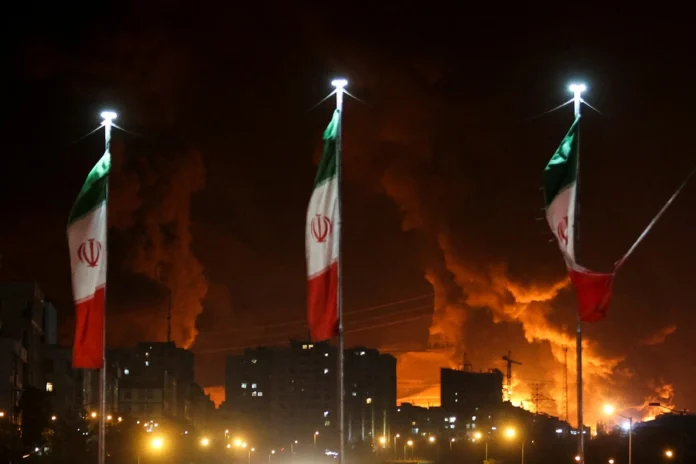
As the war involving the United States, Israel, and Iran enters its tenth day, the situation across the Middle East continues to evolve rapidly. Rising oil prices, political changes inside Iran, and escalating military operations across the region have heightened global concerns about the conflict’s long-term impact.
One major development is the appointment of Mojtaba Khamenei as Iran’s new supreme leader following the death of his father, Ali Khamenei. Analysts say the leadership change comes at a critical moment, as Iran faces one of the most significant crises in its modern history.
Meanwhile, the ongoing fighting has pushed global energy markets higher and expanded military tensions across several countries in the region.
Oil Prices Surge as Conflict Expands
The war has triggered a sharp increase in global oil prices, with U.S. crude futures climbing about 18% to roughly $108 per barrel. This marks the first time oil has crossed the $100 threshold since Russia’s invasion of Ukraine in 2022.
Market analysts attribute the surge to fears that continued fighting could disrupt oil supplies moving through the Middle East.
President Donald Trump downplayed the economic impact, describing higher oil prices as “a very small price to pay.”
At the same time, the conflict has begun spreading beyond Iran and Israel, with attacks reported on oil infrastructure and refineries in other parts of the region.
Mojtaba Khamenei Takes Power
Following the death of Ali Khamenei, Iran’s powerful institutions — including the Islamic Revolutionary Guard Corps (IRGC) — have voiced strong support for his son Mojtaba Khamenei as the country’s new supreme leader.
The IRGC pledged full loyalty to the new leader, saying it would “fully obey and sacrifice their lives” in support of him.
Some analysts believe this show of support suggests the transition of power will remain stable, despite the ongoing conflict.
However, others say Mojtaba Khamenei’s rise could signal a continuation of his father’s hardline political approach, potentially limiting hopes for political reform in Iran.
President Trump previously criticized the possibility of the younger Khamenei assuming power, saying such a leadership transition would be “unacceptable.”
Military Activity Intensifies Across the Region
Fighting has continued across several locations in the Middle East.
Israel reported launching new airstrikes targeting sites in Iran and Beirut, while Tehran announced additional missile launches in response. Gulf countries also reported defensive interceptions of attacks.
In Bahrain, officials said at least 32 people were injured after an Iranian drone struck a residential neighborhood.
Iranian officials warned that Israeli attacks on energy infrastructure and fuel storage facilities have pushed the conflict into a “new phase.” They also threatened retaliatory strikes against energy sites across the region, raising concerns about potential disruptions to global oil supplies.
Strike on School Under Investigation
Another major issue under investigation involves a strike on an Iranian elementary school that reportedly killed at least 168 children, according to Iranian state media.
U.S. Defense Secretary Pete Hegseth said the Pentagon is reviewing the incident.
Recent video evidence appears to indicate that a U.S. airstrike targeted a naval base located next to the school, contradicting earlier claims from President Trump that Iran was responsible for the attack.
The investigation continues as officials attempt to determine exactly what happened.
U.S. Personnel Ordered to Leave Saudi Arabia
As the security situation deteriorates, the U.S. State Department has ordered non-essential diplomatic personnel to leave Saudi Arabia.
The decision reflects growing concern over the safety of American personnel as the conflict expands.
Earlier in the week, a U.S. service member died after sustaining injuries during an attack in Saudi Arabia, highlighting the increasing risks facing U.S. forces in the region.
Rising Anxiety Among Civilians
Inside Iran, civilians are grappling with uncertainty about whether to remain in their homes or flee to safer areas.
One resident in Tehran told reporters that his family is divided about whether to leave the city, describing the situation as extremely stressful.
According to the resident, Israeli strikes targeting fuel depots over the weekend were “the heaviest bombardments since the war began.”
U.S. Leaders Address Energy Concerns
In Washington, officials are attempting to calm fears about the rising cost of fuel.
White House press secretary Karoline Leavitt described higher gasoline prices as a temporary disruption caused by the conflict.
Meanwhile, Senate Minority Leader Chuck Schumer urged the administration to release oil from the Strategic Petroleum Reserve, the world’s largest emergency stockpile, in order to help stabilize prices.
Who Will Decide When the War Ends?
President Trump said the decision to end the conflict will ultimately be made jointly with Israel, although the United States will have the final say on the conditions for ending the war.
In an interview with The Times of Israel, Trump said Israeli Prime Minister Benjamin Netanyahu would participate in discussions but Washington would determine the final terms.
Defense Secretary Hegseth also stated that the United States would help define the “terms of surrender” for Iran, though he did not provide further details about what those conditions might include.
The Bottom Line
Ten days into the conflict, tensions remain high across the Middle East. The appointment of a new Iranian supreme leader, rising oil prices, and expanding military operations suggest the situation could continue to escalate.
With multiple countries now involved and global energy markets reacting, the war’s outcome could have lasting implications for both regional stability and the world economy.