
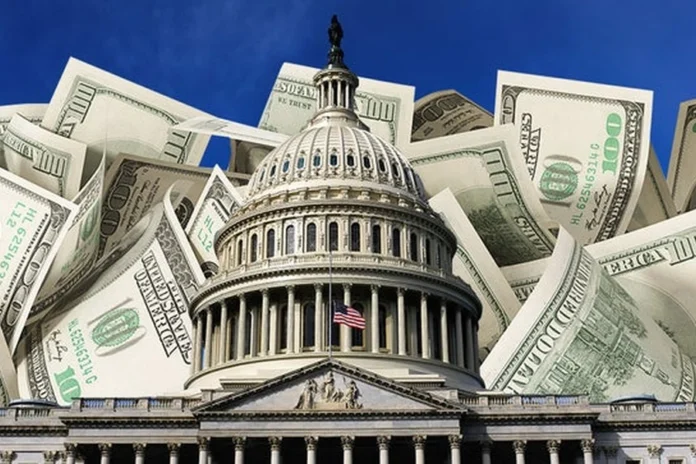
For years, a tidy thought experiment has circulated whenever wealth inequality comes up at the dinner table or in a comment thread: if a few hundred of the richest Americans simply handed over their fortunes, couldn’t they wipe out the national debt overnight?
The idea has only gotten louder in 2026. In June, the United States produced the first trillionaire in recorded history, and the combined wealth of American billionaires reached a scale that would have sounded like science fiction a decade ago. So it’s a fair moment to run the numbers honestly — not as a political talking point, but as arithmetic. The answer is clarifying, and a little humbling.
Start With the Two Numbers That Matter
There are two figures at the heart of this question, and both have grown since this debate last made the rounds.
The first is billionaire wealth. As of early-to-mid 2026, the United States is home to somewhere in the neighborhood of 935 to 990 billionaires, depending on the day and the source, with combined assets estimated at roughly $8.1 to $8.4 trillion. That total has climbed sharply — it was closer to $6 trillion just a year or two earlier — fueled largely by surging technology and AI valuations. In June 2026, that concentration hit a symbolic peak when one individual’s net worth crossed the $1 trillion line for the first time ever.
The second number is the national debt. As of June 2026, the gross federal debt sits at roughly $39.2 trillion and is climbing by something like $8 billion a day. Forecasters expect it to cross $40 trillion before the end of the year.
Put those side by side and the thought experiment falls apart almost immediately.
The Uncomfortable Arithmetic
If every American billionaire liquidated everything they own — every share of stock, every company, every yacht, every acre — and signed the entire proceeds over to the Treasury, the payment would cover roughly one-fifth of the debt. About 21 cents on the dollar.
The country would still owe more than $30 trillion the next morning.
And that’s the optimistic version, because it pretends those fortunes could be converted to cash at face value. They can’t. The bulk of billionaire wealth isn’t sitting in bank accounts; it’s locked up in the stock of companies these people founded or control. Forcing the simultaneous sale of trillions of dollars in shares would flood the market with sellers and almost no buyers, collapsing the very prices those valuations are based on. The “$8 trillion” would shrink dramatically the moment anyone actually tried to spend it — and the resulting market crash would ripple straight into the retirement accounts and pension funds of ordinary Americans.
So even in the most extreme hypothetical, the richest people in the country couldn’t retire the debt. They couldn’t come close.
Why You Should Care Even If This Feels Abstract
For most households, the national debt registers as background noise — a giant number on a website somewhere, disconnected from the grocery bill. But it quietly shapes everyday finances in ways worth understanding.
The clearest link is interest. The government pays to borrow, and right now the average interest rate on its marketable debt is around 3.4 percent. On a balance this size, that adds up fast: net interest is on track to consume roughly 14 percent of all federal spending in fiscal 2026 — money that can’t go toward anything else. Lower debt would mean smaller interest payments, freeing up funds that could otherwise support infrastructure, healthcare, or education.
Heavy government borrowing can also put upward pressure on interest rates more broadly, which is the part that reaches your wallet. The cost of mortgages, car loans, and small-business financing all move in sympathy with what it costs the government to borrow. And a lower debt load gives Washington more room to respond when a real crisis hits — a recession, a pandemic, a natural disaster — without tipping the economy toward instability.
What If the Wealthy Just Paid Down Part of It?
A more modest version of the idea is worth taking seriously: forget erasing the debt — what if a one-time contribution from the ultra-wealthy simply knocked a chunk off the top?
In the short run, you’d see some real effects. The headline debt figure would tick down. Treasury might borrow a little less for a while. Interest costs could ease slightly, and borrowing rates across the economy might dip.
But economists are nearly unanimous that the relief would be temporary, and here’s why: a one-time payment does nothing about the reason the debt grows in the first place. The federal government runs an annual deficit — it spends more than it collects, year after year. The major drivers, including Social Security, Medicare, defense, and the interest on the debt itself, are ongoing obligations measured in trillions per year. Pour in a giant one-time check, and the spending machine simply keeps running. Within a few years the debt would climb right back to where it started.
It’s the financial equivalent of bailing water out of a boat without patching the hole.
What Actually Moves the Needle
If a billionaire bailout isn’t the answer, what is? The consensus among fiscal analysts isn’t a single dramatic gesture but a combination of slow, structural changes — the unglamorous kind that rarely trend online.
The recurring themes include putting long-term entitlement programs like Social Security and Medicare on sustainable footing as the population ages; broadening the tax base and closing loopholes rather than relying on one-off wealth seizures; encouraging the kind of economic growth and productivity that lifts government revenue naturally; and keeping inflation and borrowing in check so interest costs stay manageable.
None of these are quick. None of them fit on a protest sign. But unlike a single enormous check, they address the underlying math rather than the symptom.
The Bottom Line
The wealth concentrated at the very top of American society is genuinely staggering — staggering enough to produce the planet’s first trillionaire. And yet, measured against a national debt approaching $40 trillion, even the combined fortunes of every billionaire in the country amount to roughly a fifth of what the United States owes.
The thought experiment is a useful one precisely because of where it leads. It reveals that the debt isn’t a problem of finding one big pot of money — it’s a problem of long-term choices about spending, taxes, and growth. Against obligations measured in the tens of trillions, even a trillion dollars turns out to be something closer to a drop in a very deep bucket.
This article is for general informational purposes and does not constitute financial advice. Figures reflect publicly reported estimates as of June 2026 and change over time.